

Youth and Climate Engagement in China
For young people in China, climate change is rarely a conversation - it's a headline. Interest exists, but the spaces to turn that interest into dialogue, reflection, and shared understanding largely don't. Especially for a generation shaped by the pandemic, in-person collective discussion has become unfamiliar territory. As social life moved online, the habit of face-to-face exchange faded with it. Consequently, climate change is frequently experienced as a distant observation, rather than a shared challenge to grapple with together.
Physical Spaces, Real Connections
CYCAN addresses this gap. It brings young people to sit at the table — literally. The organization creates offline spaces that young people yearn to enter. Board games and theatre serve as entry points for youth participation - formats deliberately chosen for their accessibility and ability to lower barriers to discussion. Ultimately, they are both playful and culturally familiar. They carve out space to explore questions together and spark curiosity among those who might otherwise remain outside organized climate activities. By framing climate change as a shared problem that a community can tackle, rather than an abstract threat, these formats unlock doors that conventional engagement often keeps closed.
Expanding Reach, Inspiring Initiative
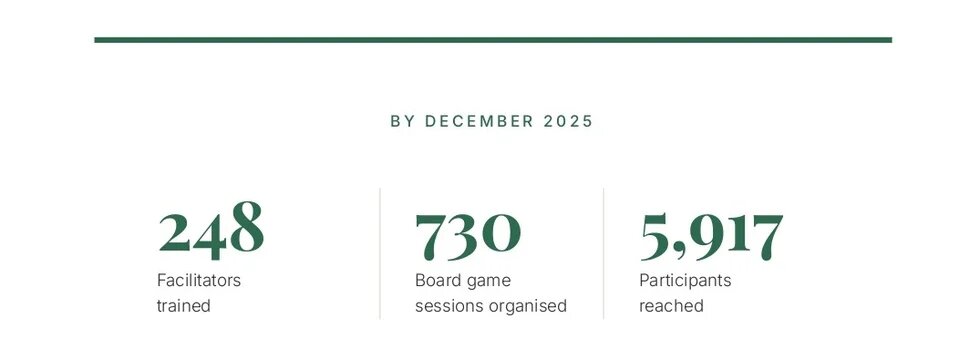
Through its board game, CYCAN has established initial points of contact with a diverse group of young participants. By December 2025, 248 facilitators had been trained, 730 board game sessions had been organized, and more than 5,917 participants had taken part. Beyond mere scale, these figures reflect an innovation in how dialogue with young people is initiated, particularly in community and semi-public settings.
Beyond Participation: Cultivating Deeper Engagement
The board games and theatre are a beginning, not a destination. Building on the youth communities formed and the thousands of young participants reached, the project will move toward deepening climate dialogue and learning. This includes more sustained forms of exchange, education, and reflection that respond to the interests and experiences of participating youth.
The goal is not to replace online engagement but to complement it — giving young people the offline experience to develop confidence, collective awareness, and a shared language around climate change.
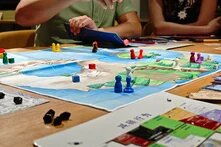
Wooden figures representing the players of the board game.
Image credits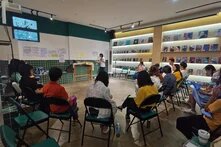
Training session on facilitating a discussion about climate change.
Image credits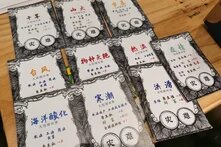
“Disaster” cards of the board game, simulating extreme climate events.
Image credits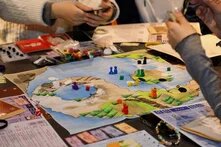
Two sides of the board game: Nation of Ocean and Nation of Soil.
Image credits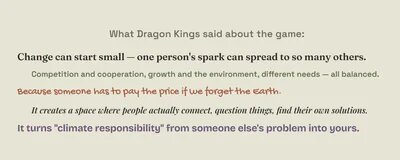
Comments by Dragon Kings (board game hosts)
Image credits